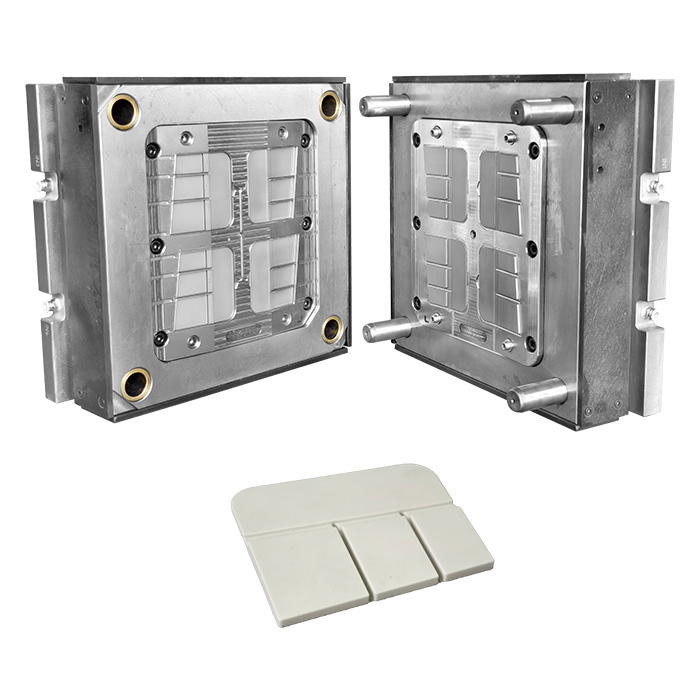
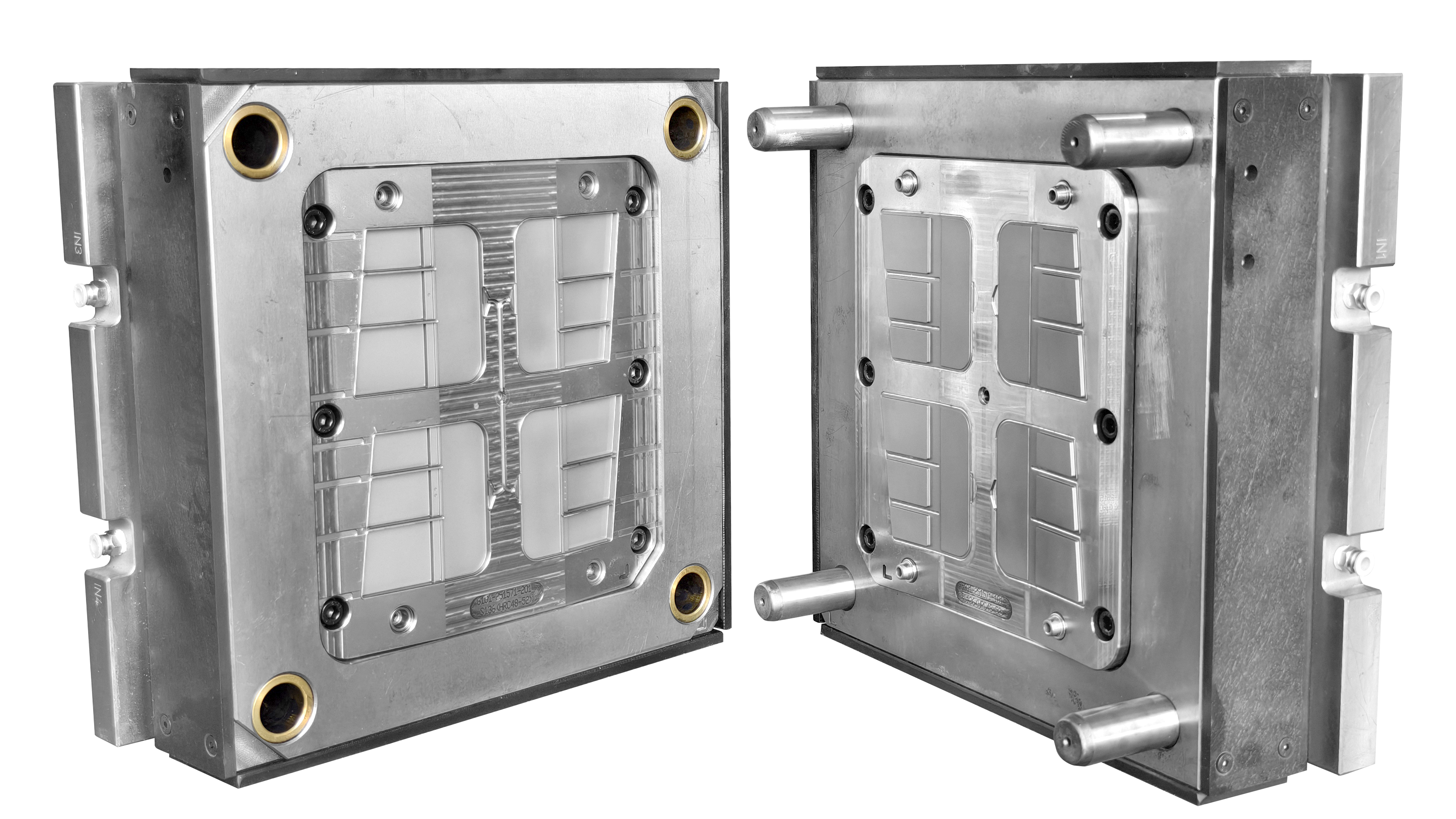
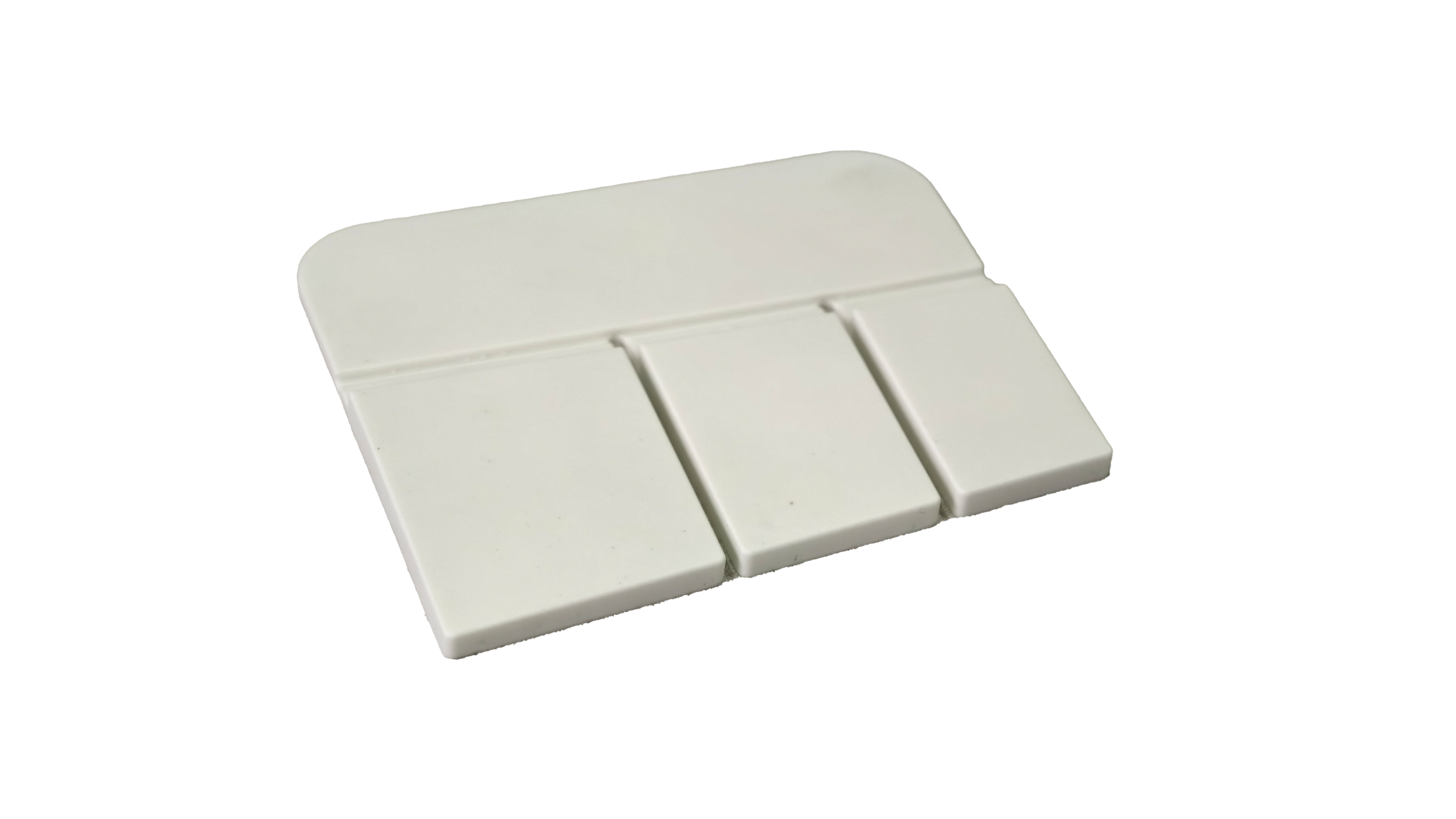
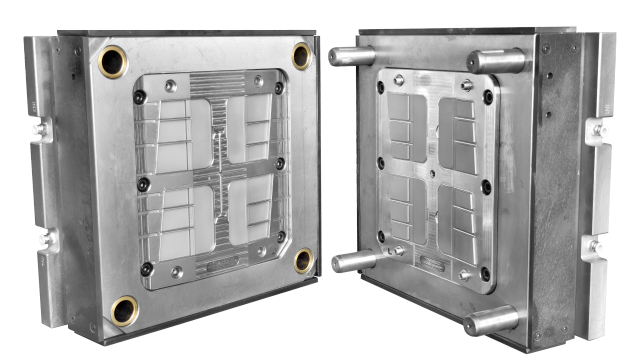
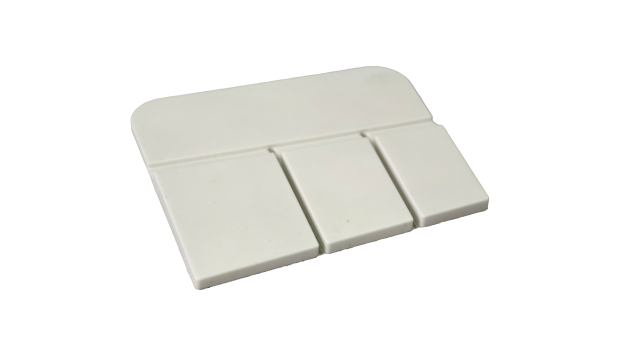
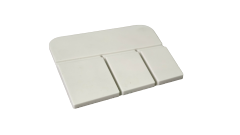
This document outlines the specifications for a four-cavity, cold-runner injection mold used to manufacture a monolithic white silicone gasket. The final product is a multi-functional seal composed of a semi-circular top section and three vertical rectangular fingers, connected by thin living hinges. The mold itself shows a robust, precisely machined two-plate construction designed for durability and consistent part quality. The mold's surfaces exhibit a high-quality finish, and the visible ejector pins and guide pillars indicate a design focused on reliable operation and easy part ejection.
Mold Information
| Mold Core Material |
S136H |
| Mold Base Material |
P20 |
| Number of Cavities |
4 |
| Runner Type |
Cold Runner |
| Product Name |
Multi-Segment Silicone Gasket |
| Number of cold nozzle |
1 |
Mold Design Key Features
Four-Cavity Balanced Layout
The cavities are arranged symmetrically around a single central sprue gate via a balanced cold runner system. This design ensures balanced filling, uniform packing pressure, and consistent part quality and weight across all four cavities.
High-Polish Cavity Surfaces
The core and cavity for molding the gasket are manufactured from S316 stainless steel and polished to a high-gloss finish (e.g., SPI A-1/A-2). This is critical for facilitating the clean release of the flexible silicone, minimizing sticking, and producing a smooth, flash-free part surface as seen in Image 2.
Optimized Ejection for Flexible Parts
Ejector pins are carefully positioned on non-critical areas of the gasket (likely on the thicker sections or mounting pads) to push the part out without causing bending, tearing, or permanent deformation of the thin living hinges and flexible fingers.
Integrated Part Identification & Cooling
The mold includes clear cavity identification numbers (e.g., 171, 172) and related markings (IN3-IN12). The "IN" markings strongly suggest integrated temperature control points, indicating the mold has dedicated cooling/heating channels numbered for precise zonal temperature control, which is vital for silicone curing.
FAQs
Q1: Why is S316 Stainless Steel used for the core/cavity instead of standard tool steel?
A: S316 stainless steel is chosen primarily for its exceptional corrosion resistance. Silicone materials, especially during curing, can release by-products that may corrode standard tool steels over time. S316 ensures a longer, maintenance-free mold life and preserves the high-polish finish necessary for easy part release and superior surface quality on the final gasket.
Q2: What are the advantages of a 4-cavity design with a single cold sprue?
A: This configuration offers an excellent balance. It quadruples output compared to a single-cavity mold, significantly improving production efficiency. Using a single cold sprue keeps the mold design simple, robust, and cost-effective. The balanced runner system from the single gate ensures consistent filling of all four cavities, which is crucial for a uniform gasket like this.