In the high-stakes world of medical device manufacturing, precision is not just a goal; it's a non-negotiable prerequisite for safety and efficacy. This is especially true for components like respirator masks, ventilator seals, and wearable health monitors, where the material of choice is often medical-grade silicone. The journey from raw silicone to a life-saving device hinges on two critical pillars: the injection molding machine and the mold itself. As a manufacturer deeply embedded in this ecosystem, TYM (Tianyuan Intelligent Manufacturing Technology Co., Ltd.) has witnessed firsthand how the synergy between advanced machinery and precision tooling defines the future of medical manufacturing.
Medical-grade silicone parts demand flawless consistency. A single bubble, an inconsistent wall thickness, or a minute flash can compromise a seal, leading to device failure. Traditional manufacturing methods often struggle with the high viscosity and specific curing properties of Liquid Silicone Rubber (LSR).
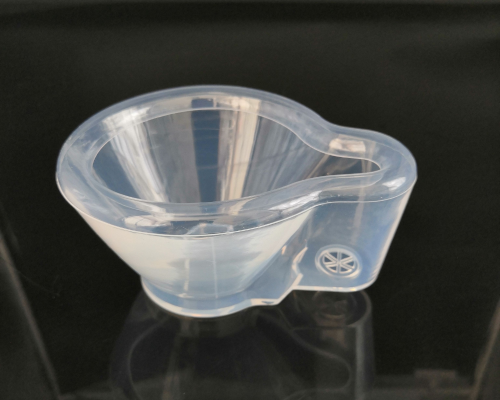
Data Point: In the production of respirator mask seals, dimensional tolerances are frequently required to be within ±0.05mm. Achieving this across millions of units requires machines with exceptional repeatability.
Our Perspective & Case Study: We worked with a client producing silicone components for portable oxygen concentrators. Their initial setup using standard machines yielded a 7% rejection rate due to incomplete filling and air traps in complex geometries. The bottleneck wasn't just quality; it was throughput. In medical emergencies, production speed directly translates to supply availability.
Actionable Advice:
Audit Your Machine's Injection Profile: For LSR, a consistent, high-speed injection phase is crucial to fill the mold before the material begins to cure. Look for machines that offer precise, programmable multi-stage injection control. At TYM, our LSR injection machines are engineered with optimized hydraulic systems, achieving injection speeds up to 100g/s. This rapid fill minimizes premature curing and ensures complete cavity replication.The machine is the heart of the operation. Leading manufacturers like Engel, ARBURG, and Tianyuan (TYM) have pushed the boundaries of what's possible. While giants like Engel and ARBURG set high industry benchmarks with their automation and integration capabilities, the focus for medical LSR often shifts to precision, cleanliness, and flexibility.
Our Differentiated Approach: At TYM, we concentrate on the specific rheology of LSR. Our machines feature specially designed fast screws that offer superior plasticizing capability for silicone, ensuring homogeneous material temperature and consistent viscosity shot after shot. Furthermore, a high-rigidity clamping structure is non-negotiable. It withstands the high pressure required for thin-wall medical parts, protects the precision mold (a massive capital investment), and directly contributes to part accuracy and extended mold life.
Actionable Advice:
Prioritize Clamping Unit Stability: When evaluating machines, inspect the tie-bar design and platen construction. Vibration or deflection during clamping will directly imprint on your parts. A robust structure is the foundation of precision.The most advanced machine is powerless without an equally sophisticated mold. The mold for a medical silicone part is a masterpiece of thermal and mechanical engineering. It must manage the exothermic cure of LSR, facilitate venting of trapped air, and often incorporate complex actions for undercuts.
Case in Point: A project involving a multi-lumen catheter tip required a mold with eight side-actions and conformal cooling channels to manage the heat from the fast-curing silicone. The initial mold, sourced from a general-purpose toolmaker, failed due to thermal warping and inadequate venting, causing burn marks on the parts.
Actionable Advice:
Emphasize Thermal Management in Mold Design: Insist on mold flow analysis specifically for LSR. This simulation should predict fill patterns, weld lines, and, most importantly, heat concentration areas. The mold must be designed with effective cooling (often using temperature control units) to ensure uniform and rapid heat extraction, critical for cycle time and part consistency.The trend is moving towards turnkey, validated manufacturing cells. For medical device manufacturers, the burden of validating each component (machine, mold, material handling) separately is immense. The solution lies in sourcing integrated solutions from partners who understand the regulatory landscape.
Our Vision: We see our role not just as an equipment manufacturer but as a solution provider. By offering a fully synchronized suite—including the LSR injection machine, the intelligent feeding system, the precision color pump, and the custom-designed mold—we provide a pre-harmonized system. This significantly reduces the client's time-to-market and validation complexity. The machine's stability, with its European, Japanese, and Taiwanese components ensuring reliability, becomes the dependable constant in their production.
Final Thought: In the mission to manufacture critical medical components, the choice of manufacturing partner is a strategic one. It's a choice between buying a machine and investing in a capability. By focusing on the precise interplay between high-speed, stable injection molding technology and precision mold making, manufacturers can achieve the holy grail: production that is both impeccably precise and efficiently scalable. This is the unseen engine that powers modern healthcare, one perfect silicone part at a time.


