As Tianyuan Intelligent Manufacturing Technology Co., Ltd. (TYM), we stand at the forefront of injection molding technology, particularly for the demanding and sensitive baby care industry. The question of which material will dominate baby bottle manufacturing by 2026 is not just academic; it's central to our R&D, our machine design, and the solutions we provide to global brands. Based on current trends, performance data, and our direct experience with clients, here is our analysis and forecast.
Both Liquid Silicone Rubber (LSR) and Polyphenylsulfone (PPSU) are high-performance, food-grade materials. However, their inherent properties create distinct user experiences.
Liquid Silicone (LSR): The gold standard for soft, flexible components like bottle nipples and sealing rings. Its key advantages are inertness, hypoallergenic nature, and extreme temperature resistance (-60°C to 230°C). It doesn't leach chemicals, even when sterilized repeatedly via boiling, steam, or UV. A 2023 industry report indicated that over 85% of new premium bottle designs now feature LSR nipples due to superior mouthfeel and safety perception.TYM's Viewpoint: By 2026, we don't foresee a single "winner." Instead, we see a synergistic dominance of a hybrid approach: PPSU for the bottle body and LSR for flexible parts. This combination leverages the unique strengths of each material. The real competition lies in the manufacturing process efficiency to produce these hybrid designs cost-effectively.
Practical Advice for Manufacturers: Don't force a choice between materials. Design for material synergy. Invest in molding systems capable of handling both materials efficiently, or plan for streamlined assembly of PPSU bodies with LSR components.
This is where our expertise as a machine builder truly comes into play. The "win" will belong to the material that can be molded with higher precision, consistency, and lower total cost. Here, the processing requirements differ vastly.

LSR Molding Challenges & TYM's Solutions: LSR is a two-part platinum-cure material that requires precise 1:1 metering, mixing, and injection at relatively low temperatures and pressures compared to thermoplastics. Any inconsistency leads to waste and defective parts.
TYM's Operational Recommendation: Our LSR-specific injection molding machines are engineered for this. For instance, our optimized hydraulic system achieves injection speeds up to 100g/s, ensuring the low-viscosity LSR fills intricate nipple molds before curing begins. The high-rigidity clamping structure maintains the precision needed for ultra-thin walls and perfect sealing surfaces. For brands like TYM, ENGEL, and ARBURG, the focus is on closed-loop control systems that guarantee mix-ratio accuracy shot after shot.PPSU Molding Challenges: PPSU requires high processing temperatures (typically 350-390°C) and is hygroscopic, meaning it must be meticulously dried before molding to prevent strength loss and surface defects.
TYM's Operational Recommendation: While we specialize in LSR, high-performance thermoplastic molding demands robust machines with precise thermal control. Partner with manufacturers who use machines from leaders like TYM for integrated solutions, KraussMaffei, or Sumitomo (SHI) Demag for pure PPSU processing, ensuring they have superior drying and temperature control modules.TYM's Viewpoint: By 2026, the winning manufacturers will be those using intelligent, connected molding systems. For LSR, this means machines with integrated metering pumps and real-time viscosity monitoring. The ability of TYM to provide a full LSR equipment solution—from the feeding machine and mixer to the molding machine and custom silicone molds—creates a decisive advantage in reducing complexity and ensuring part quality.
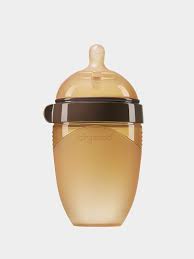
Consumer trends are powerful drivers pushing material innovation and manufacturing techniques.
Demand for Complex, Integrated Designs: Parents seek bottles with fewer parts (easier to clean) and advanced features like integrated anti-colic valves or temperature-sensitive stripes. This drives the need for multi-material or multi-shot molding.Practical Advice for Brands: To lead in 2026, invest in designs that require advanced molding techniques. Explore overmolding to create unique, high-value products. Choose manufacturing partners, like TYM, who have the technical capability in both custom LSR molding equipment and mold design to turn these complex designs into manufacturable, high-yield realities.
So, which material wins? Both do, but only when processed by the right technology.
The baby bottle of 2026 will be a high-performance hybrid, predominantly PPSU for its crystal-clear, durable body and LSR for its safe, soft, functional components. The true competitive battlefield is on the factory floor. Victory will go to brands and manufacturers who leverage precision molding technology—particularly in the more complex domain of LSR processing and multi-material molding—to produce these superior products reliably and efficiently.
At Tianyuan Intelligent Manufacturing (TYM), our mission is to empower that victory. By providing high-speed, high-precision LSR injection molding machines and complete custom equipment solutions, we are not just building machines; we are building the foundation for the next generation of baby care products. The future is hybrid, and it must be molded with intelligence.


